Screens, dopamine, and the bedroom.
Blue light gets all the blame. The real story is more uncomfortable — and has less to do with light wavelengths than with the engineered loops keeping you engaged at 1am.
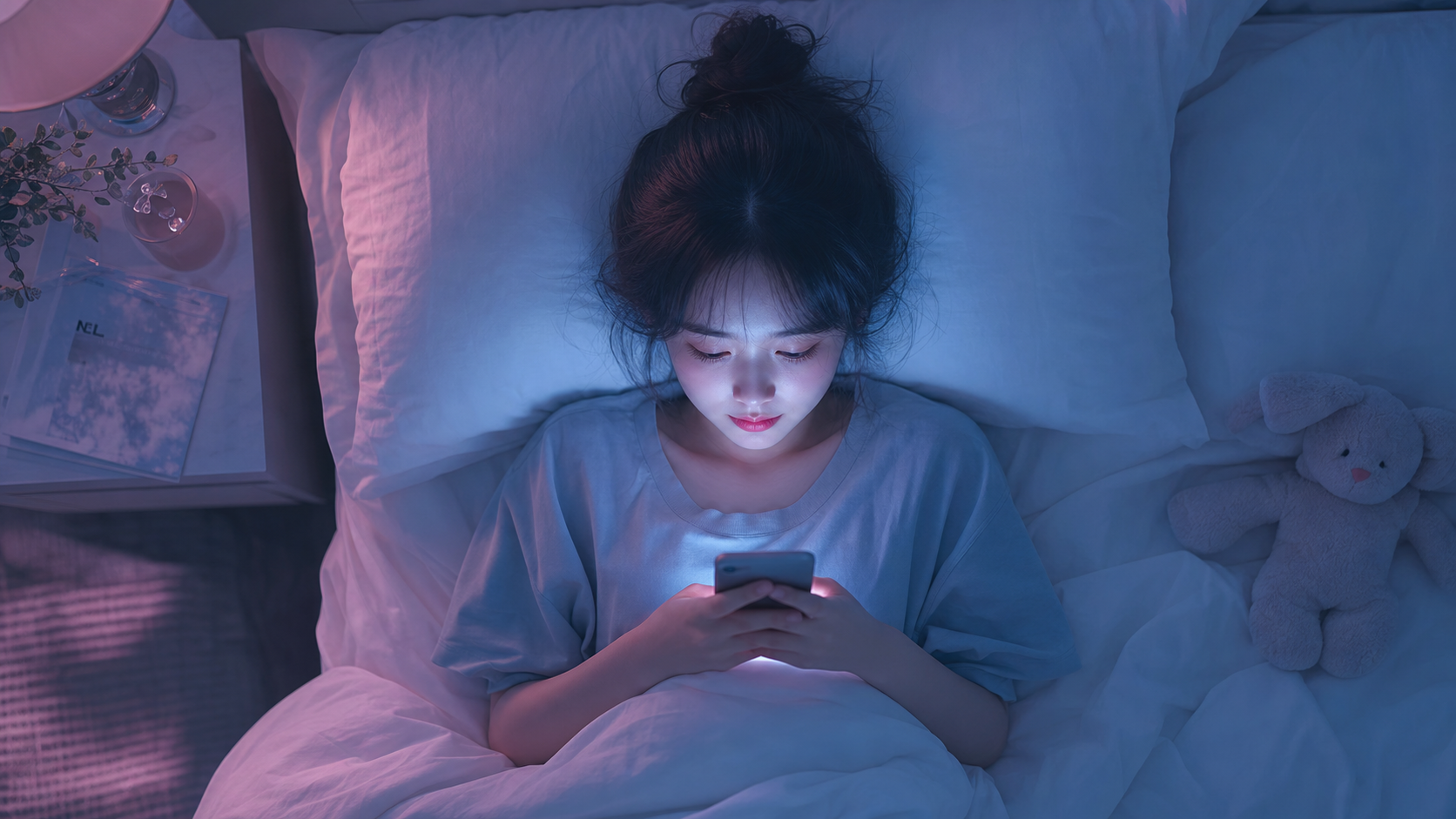
For about ten years, the dominant explanation for why screens wreck sleep has been blue light. Phones, tablets, and laptops emit short-wavelength light. Short-wavelength light suppresses melatonin. Therefore, the story goes, your phone in bed is a melatonin-suppression device, and night-mode apps and blue-light glasses are the cure.
It’s a tidy story. It’s also, mostly, wrong.
What the recent research says about blue light
Newer, better-controlled studies have started to walk back the strength of the blue-light claim. Several recent meta-analyses have found that the melatonin-suppressing effect of typical evening phone use is real but small — much smaller than older lab studies suggested.
A 2022 study in Sleep Health compared participants using phones at night with and without blue-light filters. There was no significant difference in sleep quality between the two groups. Other recent work has reached similar conclusions: blue-light filtering features may have a measurable effect on melatonin, but the effect on actual sleep onset, duration, and quality is modest at best.
This doesn’t mean screens are fine in bed. It means the mechanism most people have been told about is the wrong one.
What actually wrecks sleep
The bigger problem with screens before bed isn’t photonic. It’s psychological.
Engagement is the point of the product
Social media, video, and news apps are engineered to maximize attention. The internal metric every consumer-tech product optimizes against is “time spent” or some variant of it. The product team’s job is to make it harder to stop using the product than to keep using it.
That engineering — push notifications, autoplay, infinite scroll, variable-reward feeds — operates on the dopaminergic reward system. And that system is the opposite of the system that puts you to sleep.
Sleep onset requires the brain to disengage. Screens are designed to prevent disengagement.
Cortisol and arousal
A scroll session before bed isn’t neutral. Read something upsetting at 11:45pm — politics, an ex’s vacation photos, an alarming work email — and your cortisol rises. Cortisol elevation at bedtime fragments sleep architecture and delays sleep onset. Your body interprets the stimulation as a reason to be awake.
This is true even for “calming” content. The act of engaging with a stream of novel information at the moment the brain should be powering down is itself activating.
The sleep procrastination loop
Sleep researchers have a name for the specific pathology of staying up later than you intend to with your phone: bedtime procrastination. It’s the gap between when you mean to sleep and when you actually do. For chronic phone-in-bed users, that gap averages 30–60 minutes a night.
Multiply that out: a person who consistently loses 45 minutes of sleep to evening phone use is losing five hours a week, every week, on top of whatever the content itself is doing to their nervous system. The cumulative cost dwarfs any single night’s melatonin curve.
What works, in order of return
If you want to actually move the needle on screens-and-sleep, here’s what the evidence supports, ranked roughly by impact:
1. Move the phone out of the bedroom.
Not on the nightstand. Not face-down on the nightstand. Out of the room. The single most effective intervention in the sleep-and-screens literature is physical distance. If you use your phone as an alarm, buy a $15 alarm clock. The cost-benefit is absurd.
2. Set a hard cutoff time.
90 minutes before bed, ideally. Even 30 minutes is meaningful. Set a Screen Time / Digital Wellbeing block if discipline isn’t working — let the device be the bouncer.
3. Remove the engagement apps from the home screen.
Friction matters. Burying social and news apps in a folder three swipes deep cuts evening usage substantially — studies show 20–40% reductions in time spent. The activation energy is doing the work.
4. Replace the input.
Don’t just remove the screen — replace it. A paper book. A magazine. A journal. A conversation. The vacuum will get filled by something; better to choose what that thing is than to let the algorithm choose for you.
5. Blue-light filters are last.
If you must use a screen in the wind-down window, by all means turn on night mode or a blue-light filter. The benefit is small, but it’s free. Just don’t treat it as a substitute for any of the above.
The uncomfortable conclusion
The blue-light story was popular because it offered a technical solution to a behavioral problem. Buy these glasses. Toggle this setting. Keep the phone, fix the photons. It was a story you could solve without changing your habits.
The real story is harder. The problem isn’t your screen. The problem is what you do with it — and what it does to you — in the 90 minutes that should be spent winding down. There’s no filter for that.